
Longevity strength training is often misunderstood. It is often assumed that more lifting, harder sets, and longer sessions must produce better long-term outcomes. The current evidence says otherwise. The strongest longevity signal comes from a moderate weekly dose, not from living under a barbell.
That matters because longevity training isn't bodybuilding with a cleaner label. It isn't powerlifting with lighter weights either. It's resistance training programmed to keep muscle, force output, balance, and day-to-day function for decades, while managing joint stress and recovery so you can stay consistent.
The practical takeaway is simple. Build muscle with exercises you can overload safely, train close enough to failure to force adaptation, stop short enough to recover well, and keep the whole plan sustainable.
What Is Longevity Strength Training
Longevity strength training is resistance training built around healthspan. The target isn't just adding years to life. The target is keeping the physical capacities that make those years usable: getting up from the floor, carrying things, climbing stairs, absorbing impact, and staying independent.
That changes how you program.
A bodybuilding plan often pushes volume high to maximize muscle size. A powerlifting plan often accepts more orthopedic and systemic cost to drive maximal strength in a few lifts. Longevity work takes a different route. It asks a harder question: what gives you the most muscle and strength benefit for the least fatigue, the least injury exposure, and the best chance you'll still be training years from now?
A large longitudinal analysis highlighted the key point. The apparent sweet spot for strength training and longevity was 90 to 120 minutes per week, with participants in that range showing a 13% lower risk of death from any cause, a 19% lower risk of death from cardiovascular disease, and a 27% lower risk of death from neurological diseases compared with non-trainers, with no added longevity benefit beyond that range according to this Healthline summary of the British Journal of Sports Medicine study.
Practical rule: Train enough to adapt, not so much that recovery becomes the main event.
That means a good longevity program usually looks like this:
- Moderate weekly volume that you can repeat every week.
- Stable exercise selection so progression is clear and joints aren't taking unnecessary abuse.
- Near-failure effort instead of all-out grinders.
- Progressive overload applied patiently, not aggressively.
- Room for aerobic work, walking, and normal life instead of treating lifting as a full-time identity.
Strength training in this context works like preventive maintenance. You're not chasing fatigue. You're preserving capacity.
The Science of Strength Training for Longevity
Strength training is one of the few interventions that can meaningfully slow physical decline with age. It preserves the qualities that keep people independent: force production, balance recovery, coordination, bone loading, and enough muscle mass to handle illness, layoffs from training, or periods of reduced activity without a steep drop-off.

Neuromuscular preservation matters most
Muscle size matters, but longevity training is not just a hypertrophy project. The higher-value adaptation is preserved neuromuscular function. Older adults with a lifelong strength-training background have shown muscle strength and rate of force development much closer to significantly younger, moderately active adults, as reviewed in this comparison of strength versus endurance training and aging.
That rate-of-force-development point matters in real life. Catching a misstep, regaining balance on stairs, and reacting fast enough to stop a fall are time-sensitive tasks. Being strong in a slow, controlled gym rep helps. Being able to express force quickly helps more.
This is also why longevity programming should not chase pure performance extremes. The goal is not peak one-rep-max specialization or bodybuilder-level training volume. The goal is enough muscle and enough usable strength to stay capable for decades. If you want the training distinction spelled out more clearly, the tradeoffs in hypertrophy vs strength training for different goals are worth understanding.
Muscle is metabolic and mechanical protection
Muscle gives you more than movement capacity. It improves glucose handling, helps maintain insulin sensitivity, and gives the body reserve during stress. On the mechanical side, resistance training loads bone, tendons, and connective tissue in a way walking alone does not. That matters more with age, because the cost of losing tissue tolerance is not abstract. It often means less activity, more instability, and a higher chance that a minor setback turns into a long decline.
Strength also protects against the common aging pattern of inactivity feeding more inactivity. A stronger person usually has a larger buffer. They can miss training, get sick, travel, or deal with life stress and still function well.
The practical mechanism coaches care about
The mechanism is straightforward enough to guide training.
- More muscle gives you more reserve during illness, bed rest, and lower-activity periods.
- Better neuromuscular function improves recovery from slips and perturbations.
- Regular loading helps maintain bone and connective tissue capacity.
- Consistent lifting slows the cycle of weakness, reduced movement, and further weakness.
What matters in practice is how you get those benefits without burying yourself in fatigue. For longevity, the evidence and coaching reality point in the same direction. A moderate weekly dose, usually about 90 to 120 minutes total, works well. Training hard enough to get close to failure is useful because it recruits high-threshold motor units and drives hypertrophy, but taking sets to all-out failure too often adds fatigue that many adults do not need. I usually want reps in reserve, stable technique, and exercises that train a lot of muscle without a huge systemic cost.
That changes exercise selection. Joint-friendly presses, rows, split squats, leg presses, Romanian deadlifts, machine hamstring curls, pulldowns, and loaded carries usually give a better stimulus-to-fatigue ratio than constantly testing heavy barbell lifts. Maximal lifts are not banned. They are just expensive, and longevity training has to account for recovery, orthopedic wear, and the fact that you still need energy for aerobic work and normal life.
Preserve strength, preserve options. That is the science in coaching terms.
Your Longevity Strength Training Program Blueprint
The biggest programming mistake I see is treating longevity training like watered-down athlete training or watered-down bodybuilding. It should be neither. It should be precise. You want enough stimulus to grow or retain muscle, enough progression to matter, and low enough fatigue that the plan is still working six months from now.
Use the right weekly dose
The evidence-based target is 90 to 120 minutes per week of strength training. That's the weekly range most clearly tied to longevity benefit in the data already discussed. The important nuance is session distribution. Spreading that work across 2 to 3 sessions is more practical, easier to recover from, and usually better for exercise quality than cramming it into one marathon workout, as discussed in this overview of the longevity workout plan and training frequency.
Generally, this works well:
- Two full-body sessions if you're new, busy, or coming back from inconsistency.
- Three shorter full-body sessions if joints feel better with less work per day.
- An upper-lower split if you're intermediate and want a bit more exercise variety.
What doesn't work well is random exercise selection, random effort, and random progression.
Train close to failure, not to failure
Good longevity programming separates itself from ego lifting. You need hard sets. Easy sets won't build much. But taking every set to complete failure drives fatigue up faster than it drives results.
The modern recommendation is straightforward. Stopping a resistance training set 2 to 3 reps short of failure produces similar whole-muscle hypertrophy as training to failure while significantly reducing systemic fatigue and recovery time, which makes it a strong default for longevity-focused hypertrophy according to this summary of Brad Schoenfeld's hypertrophy and longevity discussion.
That means using RIR, or reps in reserve.
- Big compound lifts often work best at about 2 to 3 RIR.
- Stable machine and cable work can often go to 1 to 2 RIR.
- Failure work should be occasional, selective, and usually saved for safer isolation movements.
Coaching cue: If bar speed falls off a cliff and technique changes, you've probably gone too far for a longevity session.
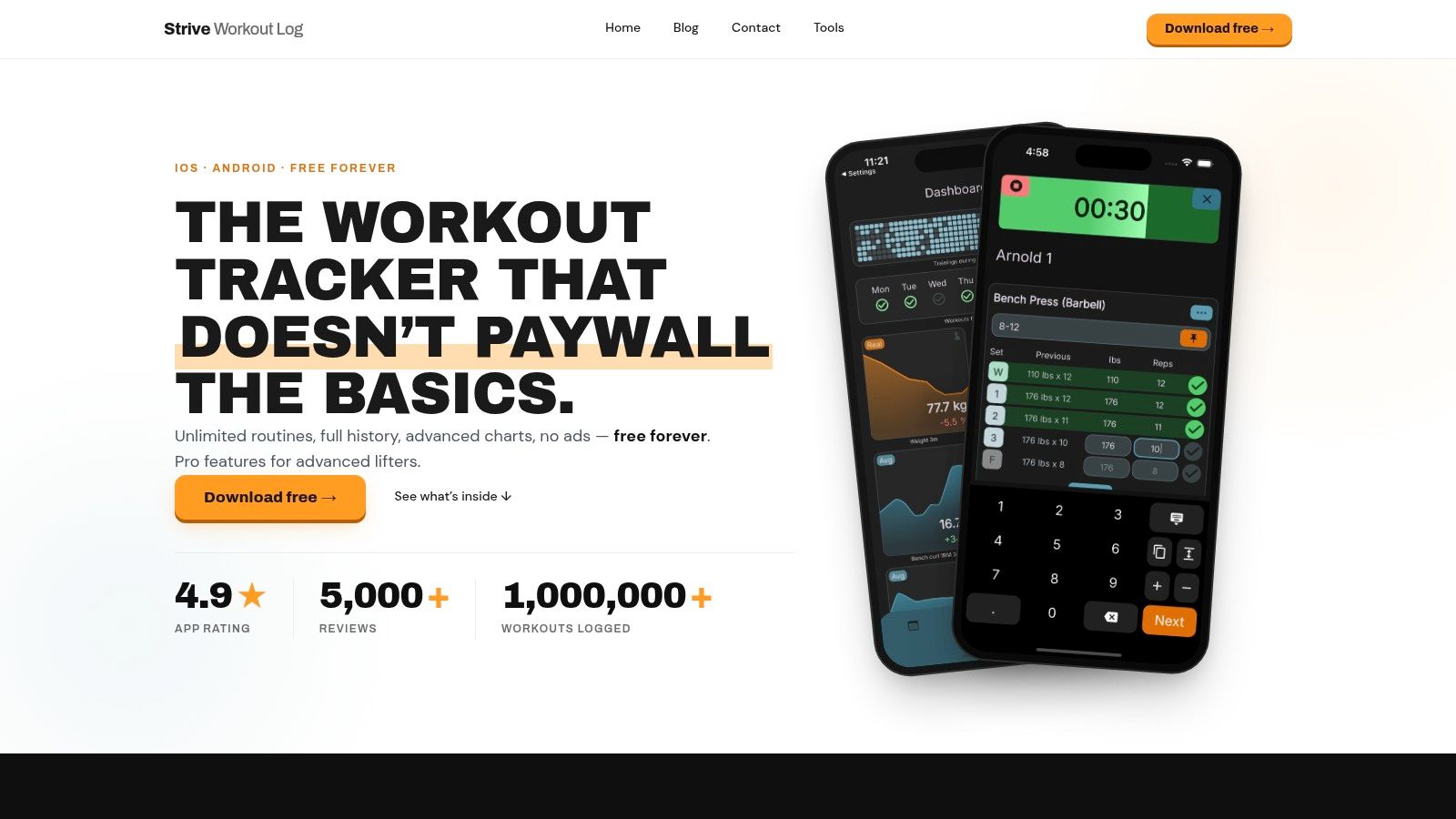
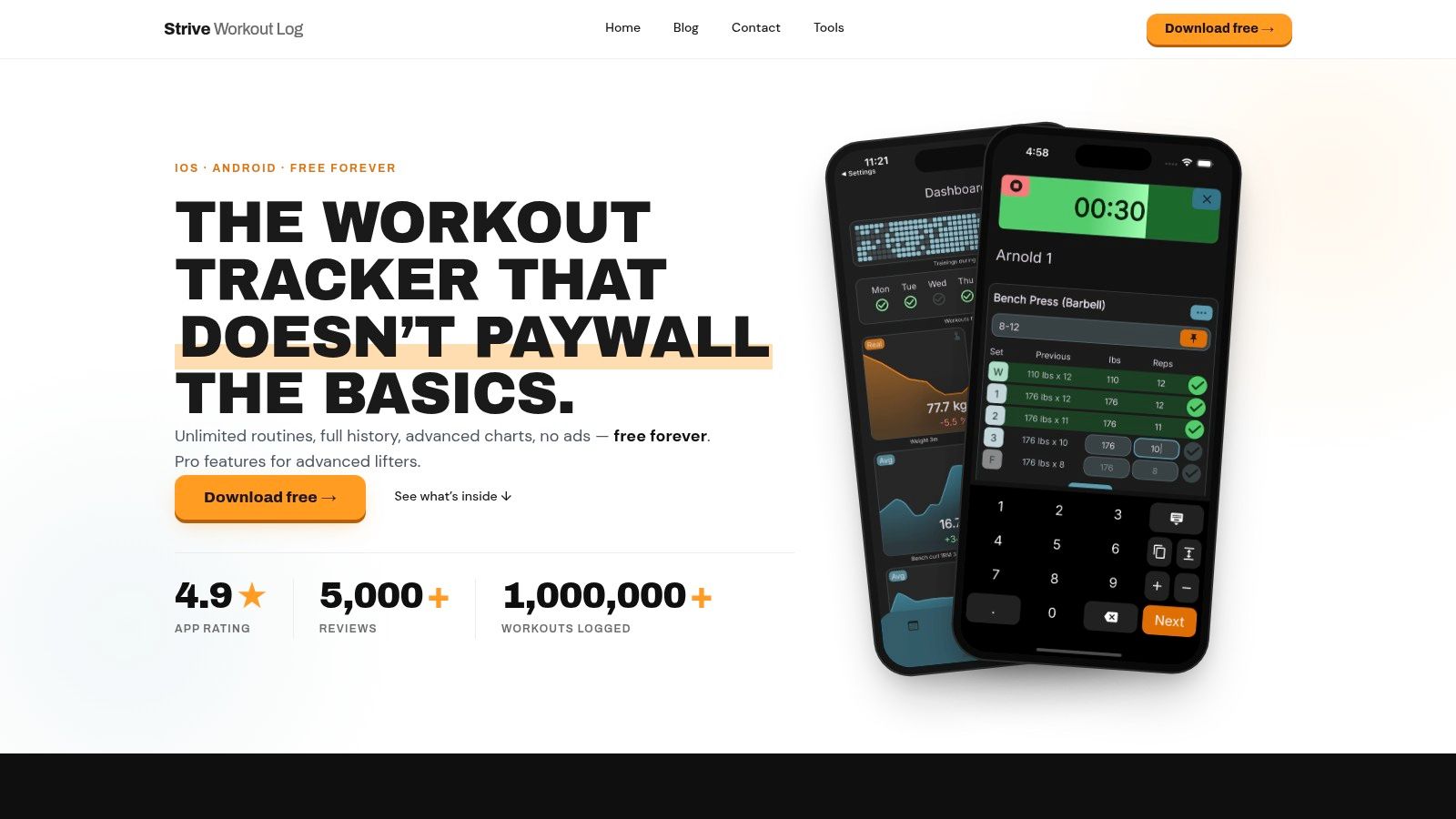
This is also where tracking helps. One practical option is Strive Workout Log, which lets you log sets, reps, loads, and RIR so you can see whether your effort is as you believe instead of guessing.
Pick exercises with a high stimulus-to-fatigue ratio
For longevity strength training, the best exercise isn't the one that looks hardest. It's the one that loads the target muscle well, can be progressed for years, uses a solid range of motion, and doesn't bury your recovery.
I usually prioritize these categories:
- Machine presses and rows because they're stable, easy to standardize, and great for pushing close to failure safely.
- Cable work for smooth resistance and joint-friendly resistance profiles.
- Squat and hinge patterns that fit your structure, which may mean a hack squat, leg press, goblet squat, Romanian deadlift, or trap-bar variation rather than forcing barbell back squats and conventional deadlifts on everyone.
- Single-leg work for balance, coordination, and lower-body strength with lower spinal loading.
- Carries and loaded holds for trunk stiffness, grip, and practical strength.
Exercise selection should answer four questions:
- Can you overload it clearly?
- Can you use a meaningful range of motion?
- Can you repeat it without joints getting angry?
- Can you recover from it while still living your life?
If the answer to any of those is no, the exercise probably doesn't belong in a longevity-focused base plan.
A useful demonstration of those programming ideas in practice is below.
Progression has to be boring
The right kind of progress is almost boring. Add a rep. Add a small amount of load. Clean up execution. Extend range of motion. Hold RIR constant while performance rises.
That kind of progress keeps tissue adapting without forcing dramatic jumps.
A simple progression model works:
- Stay with the same exercises long enough to earn progress.
- Use rep ranges, then add load once you reach the top end with the planned RIR.
- Deload when performance stalls and fatigue stays high, not because the calendar says you have to.
Longevity training rewards patience. The body doesn't care whether a session felt hardcore. It responds to stimulus, recovery, and repetition.
Sample Longevity Routines by Age and Experience
Templates matter because individuals don't need more theory. They need a week they can run. These routines all follow the same logic: stable movements, enough range of motion to drive hypertrophy, manageable fatigue, and progression you can sustain.
Beginner full-body routine two times per week
This is the cleanest starting point for a broad audience. Machine-based patterns reduce coordination demands, make load progression obvious, and let beginners learn what a hard set feels like without technical breakdown.
| Exercise | Sets | Reps / RIR Target |
|---|---|---|
| Machine Leg Press | 3 | 8 to 12 reps, 2 RIR |
| Seated Hamstring Curl | 2 | 10 to 15 reps, 1 to 2 RIR |
| Machine Chest Press | 3 | 8 to 12 reps, 2 RIR |
| Seated Cable Row | 3 | 8 to 12 reps, 2 RIR |
| Machine Shoulder Press | 2 | 8 to 12 reps, 2 to 3 RIR |
| Lat Pulldown | 2 | 8 to 12 reps, 2 RIR |
| Cable Lateral Raise | 2 | 12 to 20 reps, 1 to 2 RIR |
| Back Extension or Hip Hinge Machine | 2 | 10 to 15 reps, 2 RIR |
| Farmer Hold or Carry | 2 | Controlled effort, stop before grip slips |
A few programming notes make this work better:
- Keep rest periods honest so quality stays high on the main work.
- Use the same setup each week on machines so comparisons are valid.
- Progress reps before load if technique is still inconsistent.
Intermediate upper-lower split for adults in midlife
In your 40s and 50s, the game often changes from "can I survive more work?" to "what work still pays well?" A moderate split excels here. You get slightly more per-muscle quality without turning each workout into a marathon.
Upper day
- Incline dumbbell press, 3 sets, 6 to 10 reps, 2 RIR
- Chest-supported row, 3 sets, 8 to 12 reps, 2 RIR
- Machine chest press, 2 sets, 8 to 12 reps, 1 to 2 RIR
- Neutral-grip pulldown, 2 sets, 8 to 12 reps, 1 to 2 RIR
- Cable lateral raise, 3 sets, 12 to 20 reps, 1 RIR
- Triceps pressdown, 2 sets, 10 to 15 reps, 1 to 2 RIR
- Dumbbell curl, 2 sets, 10 to 15 reps, 1 to 2 RIR
Lower day
- Hack squat or goblet squat, 3 sets, 6 to 10 reps, 2 to 3 RIR
- Romanian deadlift, 3 sets, 6 to 10 reps, 2 RIR
- Split squat, 2 sets each side, 8 to 12 reps, 2 RIR
- Leg curl, 2 sets, 10 to 15 reps, 1 to 2 RIR
- Calf raise, 3 sets, 8 to 15 reps, 1 to 2 RIR
- Loaded carry, 2 rounds, controlled effort
- Optional trunk flexion or anti-rotation work, 2 sets
If an exercise beats up your joints more than it stimulates the target muscle, swap it. Longevity programming rewards honesty more than attachment.
This split works well when you rotate it across the week with at least one day between sessions when needed. Keep the exercise menu small enough that progression stays visible.
Full-body routine for older adults focused on strength, balance, and confidence
For adults over 60, I like plans that blend hypertrophy-friendly movements with tasks that keep balance, bracing, and practical coordination alive. That doesn't mean babying the work. It means selecting movements that are challenge-rich and chaos-poor.
Session A
- Goblet squat to a safe depth, 3 sets, 8 to 10 reps, 2 to 3 RIR
- Seated row, 3 sets, 8 to 12 reps, 2 RIR
- Dumbbell Romanian deadlift, 2 sets, 8 to 10 reps, 2 to 3 RIR
- Machine chest press or push-up to a raised surface, 2 sets, 8 to 12 reps, 2 RIR
- Step-up or supported split squat, 2 sets each side, controlled reps, 2 to 3 RIR
- Farmer carry, 2 to 3 rounds, upright posture, stop before form drifts
Session B
- Leg press, 3 sets, 10 to 12 reps, 2 RIR
- Lat pulldown, 3 sets, 8 to 12 reps, 2 RIR
- Hip hinge machine or back extension, 2 sets, 10 to 15 reps, 2 RIR
- Seated shoulder press, 2 sets, 8 to 12 reps, 2 to 3 RIR
- Hamstring curl, 2 sets, 10 to 15 reps, 1 to 2 RIR
- Carry or loaded hold, 2 rounds
- Sit-to-stand practice or controlled bodyweight squat, 1 to 2 sets
The point of these routines isn't novelty. It's repeatability. If the movement is safe, overloadable, and still producing progress, keep it in.
Nutrition and Recovery for Longevity Training
Training gives the signal. Recovery and nutrition decide whether the body cashes the check. For longevity strength training, that means stripping away the noise and handling the few recovery levers that matter most every week.

Eat to support muscle retention
The diet side doesn't need to be exotic. It needs to be sufficient. If you're asking the body to keep or build muscle, regular protein intake across the day makes that job easier, especially for older adults who tend to lose muscle more easily when food intake drops or activity becomes inconsistent.
Beyond protein, the core habits stay basic:
- Build meals around protein-rich foods so training has raw material for repair.
- Eat enough overall if recovery is stalling and performance is flat.
- Stay hydrated because fatigue and poor session quality often show up before obvious thirst does.
Sleep is part of the program
If sleep is poor, training quality usually drops first. Then recovery slows, motivation dips, and soreness hangs around longer than it should. That's one reason I like practical resources such as Golden Dreams Mattress sleep insights, which focus on what to do when sleep debt is already affecting energy and recovery.
Good programming also helps here. If you're constantly overshooting effort, sleep gets worse and the whole plan starts feeding on itself. That's why it's worth understanding how to avoid overtraining before you assume the answer is more discipline.
Recovery isn't separate from training. Recovery is how training becomes adaptation.
The people who stay strong for decades usually don't win by using the most extreme methods. They win by recovering well enough to keep showing up.
How to Track Your Longevity Strength Progress
Most lifters track the wrong things for too long. They stare at body weight, chase random soreness, or judge progress by whether a session felt hard. Longevity strength training needs better feedback than that.
Track performance first
Your log should answer a few basic questions every month.
- Are loads rising at the same RIR?
- Are reps increasing before technique breaks down?
- Is total productive work staying stable when life gets busy?
If you can't answer those, you're relying on memory, and memory is terrible at trend detection. A simple training log or analytics dashboard helps because it shows whether you are progressing across weeks instead of just remembering your best day. For a practical framework, this guide on how to track gym progress covers the key training metrics that matter.
Use functional markers too
Longevity isn't only barbell math. It also shows up in function. Grip strength is the clearest example. Every 5-kilogram reduction in grip strength is associated with a 16% increase in all-cause mortality, according to this discussion of grip strength and mortality.
That doesn't mean grip strength is the only metric. It means muscle strength is a serious health marker, not just a gym number.
Useful functional markers include:
- Grip strength if you have access to a dynamometer.
- Sit-to-stand speed as a rough lower-body function check.
- Balance quality during controlled single-leg or staggered-stance tasks.
- Carry tolerance with good posture and stable breathing.
The scale can stay the same while your real-world capacity improves. That's still progress, and for longevity it may be the more important kind.
Watch the whole picture
The best tracking combines objective and subjective markers. Log performance. Notice energy. Pay attention to joint irritation, sleep, motivation, and whether warm-ups feel easier or harder than they used to.
If strength trends are rising, daily tasks feel easier, and recovery is stable, the program is doing its job. If numbers stall while fatigue stays high, that isn't a motivation problem. It's a programming problem.
Building Strength for a Longer Healthier Life
Strength is one of the most trainable predictors of how well you hold up with age. The goal is not to chase exhaustion or collect random workouts. The goal is to build and keep muscle, strength, and function on a dose you can recover from for years.
For longevity, the sweet spot is usually modest and repeatable. About 90 to 120 minutes of lifting per week is enough for most adults to make meaningful progress if the work is organized well. That means hard sets, controlled exercise selection, and stopping close to failure instead of turning every session into a grind. I have found this is the difference between a plan people can run for months and one they abandon after three hard weeks.
Exercise choice matters more than many lifters think. Movements that train a lot of muscle with low orthopedic irritation and manageable systemic fatigue tend to age well. Machines, cables, dumbbells, supported rows, split squats, leg presses, Romanian deadlifts, carries, and simple pressing variations usually give a better return than constantly testing heavy barbell lifts when recovery is limited.
Consistency wins here.
As noted earlier, even relatively small weekly doses of strength work are linked with better long-term health outcomes. The bigger point is practical. You do not need marathon sessions. You need a plan that builds strength, preserves muscle, and leaves enough recovery capacity for the rest of life.
If you want more programming ideas in the same practical vein, these evidence-based strength plans are a useful companion resource because they focus on sustainable training decisions rather than hype.
Start where you can repeat. Add load, reps, or sets slowly. Keep a little in reserve on most work sets. Do that for years, and you give yourself a much better shot at staying capable, independent, and physically resilient.
If you want a simple way to run this kind of plan, Strive Workout Log gives you a clean place to log exercises, sets, reps, weights, and progress so you can apply progressive overload without clutter or guesswork.
Leave a Reply