
You're training hard. You show up, you do the exercises, you leave tired, and yet the mirror barely changes and the logbook isn't moving the way it should. Most lifters don't have an effort problem. They have a tracking problem.
That's where PR tracking matters.
Not PR as in public relations. PR tracking for lifting means tracking personal records in a way that helps you build more muscle and strength. If you only celebrate a random all-time one-rep max, you miss most of the progress that drives hypertrophy. If you log every set with intent, you can see whether your plan is working, whether fatigue is hiding progress, and whether your exercise choices are worth keeping.
I built my own system around that idea. It's simple. Pick exercises that can be overloaded, train them through a long range of motion, control fatigue, log everything that matters, and use that data to set your next target. That's what turns training from “working hard” into progressive overload you can reliably repeat.
Why Your Progress Has Stalled and How to Fix It
The usual stall looks like this. Your bench has hovered around the same number for weeks, your squat sessions feel random, and your accessory work changes every time you get bored. You're training, but you're not building momentum.
The problem usually isn't motivation. It's that you don't have a system for deciding what counts as progress and what your next session is supposed to beat.
What stalled training usually looks like
A plateau often comes from a few predictable mistakes:
- Too much variety: You swap exercises before they've had time to progress.
- No clear target: You start the session without knowing whether you're trying to add load, add reps, or improve execution.
- Poor fatigue management: Every set turns into a grinder, which makes recovery harder than it needs to be.
- No feedback loop: You remember your workouts loosely instead of logging what happened.
Practical rule: If you can't answer “what am I trying to beat from last time?” before your first working set, you're guessing.
That's why PR tracking matters. It gives you a map. Instead of relying on memory, you use real entries from prior sessions to drive the next one.
Fix the process before blaming the plan
When someone asks why they aren't getting stronger, my first answer usually isn't “change the split.” It's “show me your log.” If there's no consistent record of exercises, loads, reps, and effort, there's nothing to analyze. You can't troubleshoot what you didn't track.
If recovery is also part of the problem, it's worth understanding the broader side of athlete recovery and injury management. A useful reference is LMI's stem cell solutions for athletes, especially for lifters thinking about the difference between training through discomfort and managing actual tissue issues.
For a more direct breakdown of stalled strength progress, why you might not be getting stronger covers the common training errors that usually sit underneath the plateau.
The fix is straightforward. Define what counts as a PR, log with intent, plan your overload before you train, and review the trend instead of judging a single workout. That's the whole cycle.
Defining Personal Records Beyond the One Rep Max
A lot of lifters think a PR only counts if it's a one-rep max. That's too narrow, and for hypertrophy it's often the least useful way to measure progress.
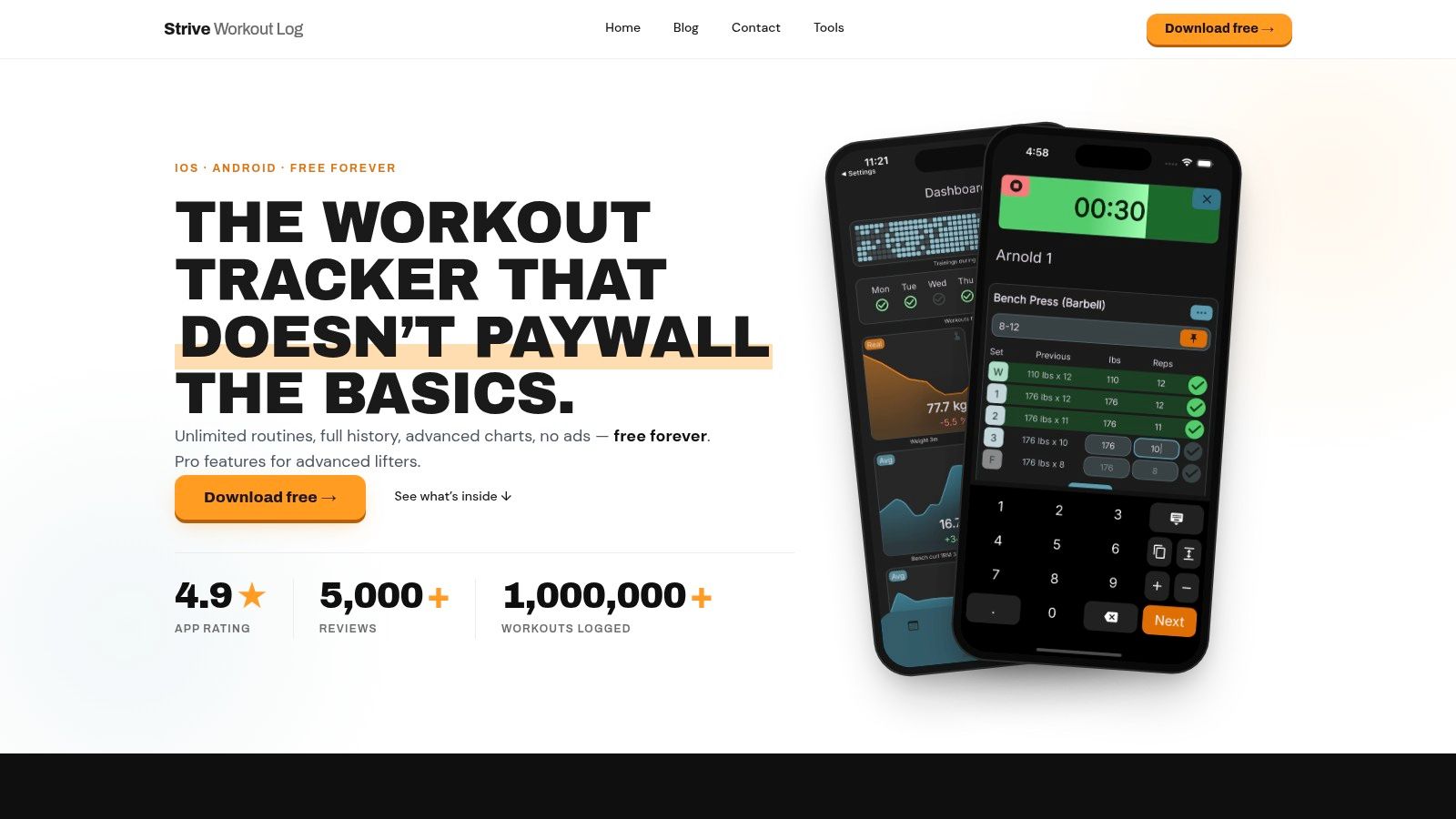
If your goal is more muscle, a better definition is this. A PR is any improvement in performance that you can repeat and build on. That includes more reps with the same load, more load for the same reps, more total work, or better execution at the same difficulty.
The PRs that matter most for hypertrophy
I separate lifting PRs into four buckets.
- Load PRs: More weight for a given rep target. Example, pressing a heavier dumbbell pair for the same clean reps.
- Rep PRs: More reps with the same weight. This is one of the most useful signs that hypertrophy training is working.
- Volume PRs: More total work across your sets. This matters when you're accumulating productive training over time.
- Technique PRs: Same weight, but cleaner reps, more control, and a larger range of motion.
That last one gets ignored too often. For hypertrophy, execution quality matters. According to Science for Sport's hypertrophy guidance, maximal hypertrophic responses are supported by using the full range of motion, with concentric tempos of 1 to 3 seconds and eccentric tempos of 2 to 4 seconds, and by training lagging body parts first so they get enough quality work and recovery.
If your old incline dumbbell press was partial reps with sloppy control and your current set uses a full stretch and a controlled lowering phase, that's progress, even if the number on the dumbbell hasn't jumped yet.
Estimating strength without maxing out
For most lifters, testing a true one-rep max all the time is more disruptive than useful. It adds fatigue, it raises injury risk if technique breaks down, and it tells you less about day-to-day hypertrophy progress than people think.
A better approach is to estimate top-end strength from your normal work sets. If you hit a strong set of moderate reps with good form, you can use a repetition max calculator to turn that into a practical estimate.
Don't chase a one-rep max when a hard, clean set already gives you enough information to track progress.
That keeps your focus where it should be. Productive training, not constant testing.
What to log every session
You don't need a complicated spreadsheet. You need consistent inputs.
Log these every time:
- Exercise selection
- Load used
- Reps completed
- Set type, if relevant
- Notes on execution, especially if range of motion changed
If you do that consistently, you've already built the raw material for meaningful PR tracking. The point isn't to collect data for its own sake. The point is to spot patterns you can act on.
Using RPE and RIR for Smarter Hypertrophy Training
Weight and reps tell you what happened. RPE and RIR tell you how hard it was.
That matters because the same set on paper can produce a very different training effect depending on proximity to failure. Ten reps with two solid reps left is not the same set as ten reps where you were hanging on for dear life with ugly form.
Why effort tracking changes your decisions
For hypertrophy, the hard reps near failure do most of the work. That doesn't mean every set should be an all-out death set. It means you should know how close you were and use that information to adjust.
If you slept badly, feel beat up, and a weight that usually moves well suddenly feels heavy, effort tracking gives you a way to autoregulate. You can still train hard enough without pretending every day should feel identical.
Here's the practical conversion I use.
| RPE | Reps in Reserve (RIR) | Description of Effort |
|---|---|---|
| 10 | 0 | Max effort. No reps left. |
| 9 | 1 | Maybe one rep left. Hard but controlled. |
| 8 | 2 | Challenging. You likely had two reps left. |
| 7 | 3 | Solid work. Not close to failure yet. |
| 6 | 4 | Easy enough that load or reps probably need to go up soon. |
How to use it in hypertrophy work
RPE and RIR are most useful on compounds and stable accessories where performance is easy to judge. On a squat, leg press, Romanian deadlift, machine press, pulldown, or chest-supported row, they're extremely practical. On very technical lifts or awkward isolation movements, they can be a little noisier.
I keep it simple:
- Most working sets: Keep them hard enough to matter, but not so hard that technique falls apart.
- Early sets: Leave a bit more in reserve.
- Last set: Push closer when the exercise is stable and recovery cost is reasonable.
Coaching note: If your logged RIR never changes, you're not measuring effort. You're just typing the same number every time.
That's the trade-off. RPE and RIR make your log much more useful, but only if you're honest.
Where subjective data meets objective data
When you compare effort data with your rep and load history, patterns show up fast. A lift that stays flat on paper but feels easier across several weeks is often about to move. On the other hand, a lift that technically progresses while RPE keeps climbing may be drifting into a recovery problem.
If you want the deeper distinction between the two systems, RIR vs RPE breaks down when each method is easier to apply.
I like effort tracking most when it prevents dumb decisions. If the plan says add weight but the warmups already feel off, RIR gives you permission to stay at the current load and still make the session productive. That's smarter than forcing progression just because your spreadsheet said so.
How to Set Targets for Progressive Overload in Strive
You finish a set of incline press, know it was better than last week, then guess at what to do next. That guess is where a lot of good training stalls. Progressive overload works best when the next target is decided before you unrack the weight.
For hypertrophy work, the broad framework is already well established. Effective training usually lives inside moderate rep ranges, enough hard sets to matter, and loads you can control well enough to keep tension on the target muscle, as outlined in the hypertrophy review in the National Library of Medicine. The useful question inside a workout is simpler. What should this exercise beat today?

Double progression is the default for a reason
For most hypertrophy lifts, I use double progression because it matches how muscle-building training behaves. Performance is rarely linear from session to session, but reps at a fixed load give you room to progress even when recovery, sleep, or exercise order are not identical.
The setup is simple. Pick a rep range. Keep the load steady until you reach the top of that range with form you would want to repeat, then add weight and build from the bottom again.
A chest-supported row at 60 kg for 8, then 9, then 10 is a real progression path. Once 10 is solid, move to 62.5 kg and work back up. That is the kind of PR tracking that matters in a muscle-building block.
Where linear progression still fits
Linear loading still has a place. It works well for newer lifters, very stable exercises, and situations where the current load is clearly below your present capacity.
It also breaks sooner than people expect. On lifts with a high fatigue cost, or lifts where small technique changes can fake progress, forcing load jumps every session usually turns a good exercise into a messy one.
That is why I set progression rules by lift type, not by ideology:
- Machine and stable compound lifts: Double progression is usually the cleanest option.
- Beginner lifts with lots of headroom: Linear progression can work for a while.
- High-fatigue barbell lifts: Smaller jumps and stricter execution rules matter more than chasing load.
- Isolation work: Rep targets are often more practical than load targets because the weight jumps are too large.
Set the target before the set
Reviewing the last workout is not enough. The log needs to produce a decision.
I use one standard: choose the smallest meaningful improvement that fits the exercise, your recent performance, and how you feel in warmups. On a good day, that may be an extra rep or a load increase. On an average day, it may be repeating the same performance with cleaner technique, better control, or lower perceived effort.
In practice, that usually means one of four targets:
- Add one rep at the same load
- Repeat the result with better execution
- Increase load after the top of the rep range is firmly established
- Match the last session if readiness is down, without letting form slip
That last option matters more than lifters want to admit. Holding performance steady on a tired day is often the right call, especially if you are training hard across multiple movements and still accumulating useful volume.
To see that idea in action, this walkthrough helps:
What this looks like inside Strive
My own logging workflow is built around that decision process, and Strive Workout Log supports it well because I can log sets, reps, load, and set the next target manually instead of treating progression like a vague intention.
Say last session on a chest-supported row was 10 reps at a given load, but the last two reps slowed down and position started to drift. I would not call that load earned. The next target is probably to repeat 10 with cleaner scapular control and less body English, not to jump weight because the number technically hit the top of the range.
That trade-off matters. The app does not make the decision for you. It gives you a clean record so the decision can be based on performance, effort, and execution instead of memory.
The best target is usually boring. One more rep. The same reps with better control. A load increase only after the current one is clearly owned.
That approach is less exciting than testing limits every session. It is also how progress keeps showing up month after month.
Analyzing Your Progress with Charts and Trends
Most lifters stop at logging. That's only half the job. The useful part comes when you read the trend and decide whether the plan is producing what you expected.
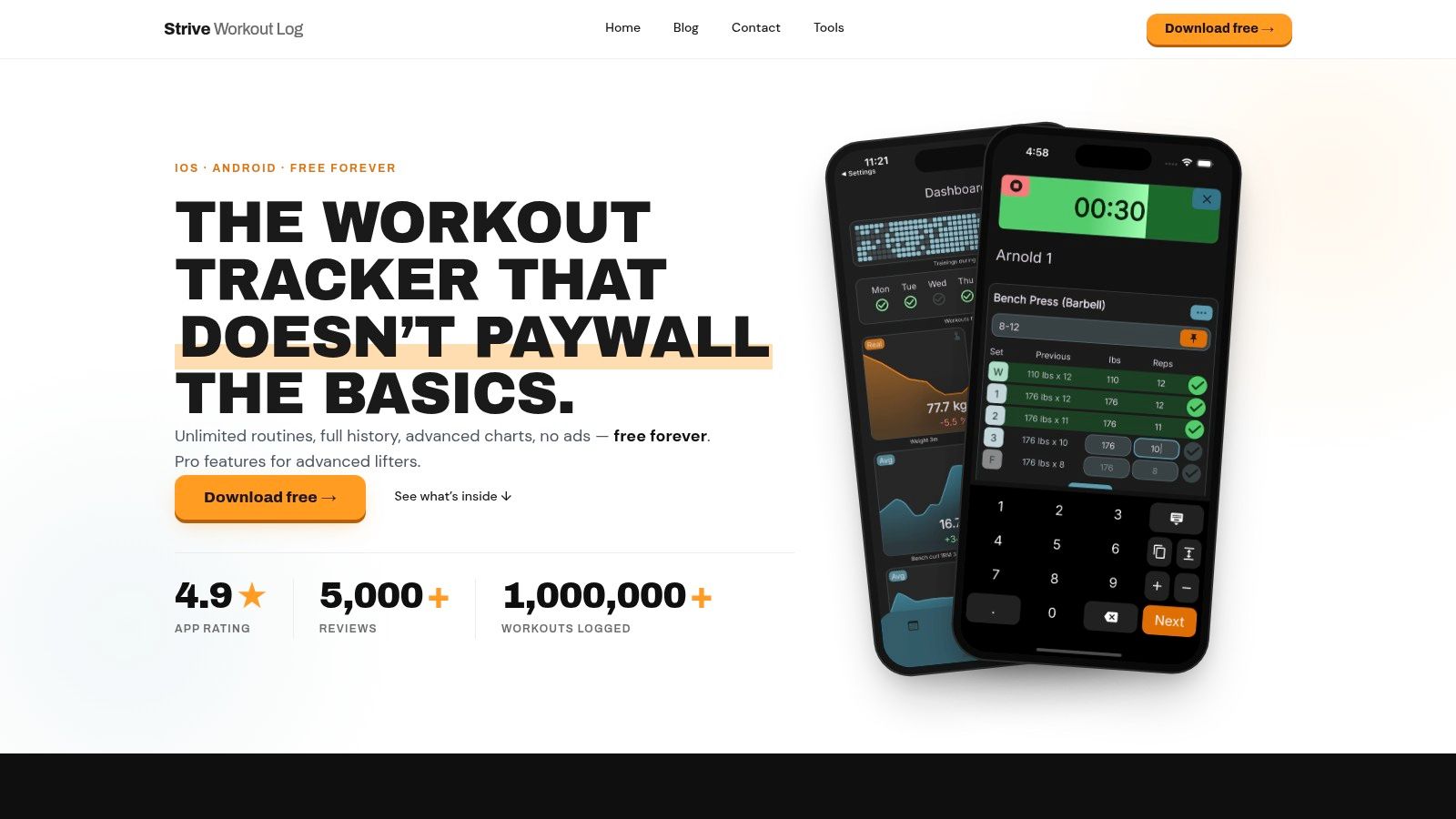
A good chart doesn't just tell you whether one workout felt good. It shows whether your training is moving in the right direction over time.
What to look for in the data
I care most about three trend lines:
- Estimated 1RM trend: Useful for seeing whether your top-end strength is drifting up without max testing.
- Rep max trend: Great for hypertrophy lifts where adding reps is the main progression path.
- Volume trend: Helpful, but only if exercise selection and execution are reasonably consistent.
If estimated strength trends up while your reps stay stable, that's usually a good sign. If reps trend up at the same load and your form is still clean, that's even better for a muscle-building phase.
How to spot a real plateau
A plateau isn't one bad workout. It's a pattern.
Here are the signs I take seriously:
- Performance flattens across multiple exposures on the same lift
- Effort climbs but output doesn't
- Technique degrades to preserve the number
- Multiple lifts stall at once, which usually points to fatigue or poor recovery rather than a single exercise problem
At that point, I don't jump straight to a new program. I ask simpler questions first. Is the exercise still a good fit? Am I repeating it often enough to improve? Is fatigue from another lift spilling into it?
That frequency piece matters. According to MadLab Performance's summary of hypertrophy training, each muscle group should be trained 2 to 3 times per week, undulating periodization can improve muscle growth and help prevent overtraining, and a hypertrophy-focused session should last 45 to 75 minutes to balance training stimulus with systemic fatigue.
Reading the trend, not chasing the spike
I'd rather see a steady climb than a flashy single-session jump. Spikes are fun, but trends are what you can program around.
If your chart rises slowly for months, that's excellent training even if no individual workout felt dramatic.
Use the graph to make calm decisions. Keep the exercise if the trend is moving. Adjust volume or frequency if the line has flattened. Replace the movement only when the data and the feel of the lift both say it's time.
Using Deloads to Plan for Long-Term Gains
A lot of lifters treat deloads like surrender. That's backwards. A deload is what keeps productive training from turning into accumulated junk fatigue.
If you push hard enough for long enough, fatigue starts hiding fitness. Performance gets noisy, joints get cranky, motivation drops, and every exercise feels harder than it should. That doesn't always mean you need a new split. Often you need less stress for a short period.
When to deload
I use two types.
- Planned deloads: Built into the training cycle before fatigue gets out of hand
- Reactive deloads: Used when performance, motivation, and recovery all start sliding at once
I don't think in rigid calendar terms unless the program demands it. I look at the training data and how lifts are moving. If several exercises stall together and everything feels expensive, that's usually the sign.
How to deload without losing momentum
The goal is to reduce fatigue while keeping movement patterns familiar. You want recovery, not total inactivity.
A practical deload usually means:
- Cut volume hard: Do much less work than usual
- Keep technique sharp: Use the same exercises when possible
- Avoid failure: Every set should feel controlled
- Leave the gym fresher than when you walked in
That last point matters. If your deload week still feels like a test of willpower, you missed the point.
Recovery is part of progressive overload. You don't just build from stress. You build from stress that you can recover from.
Marking a deload in your training log also keeps your data clean. A lower-performance session that was intentionally easy shouldn't be treated like a mystery strength drop. It should be recognized as a strategic reduction in stress so the next block can move again.
That's the full cycle I trust most. Log the work. Set the next target. Analyze the trend. Pull back before fatigue wrecks the signal.
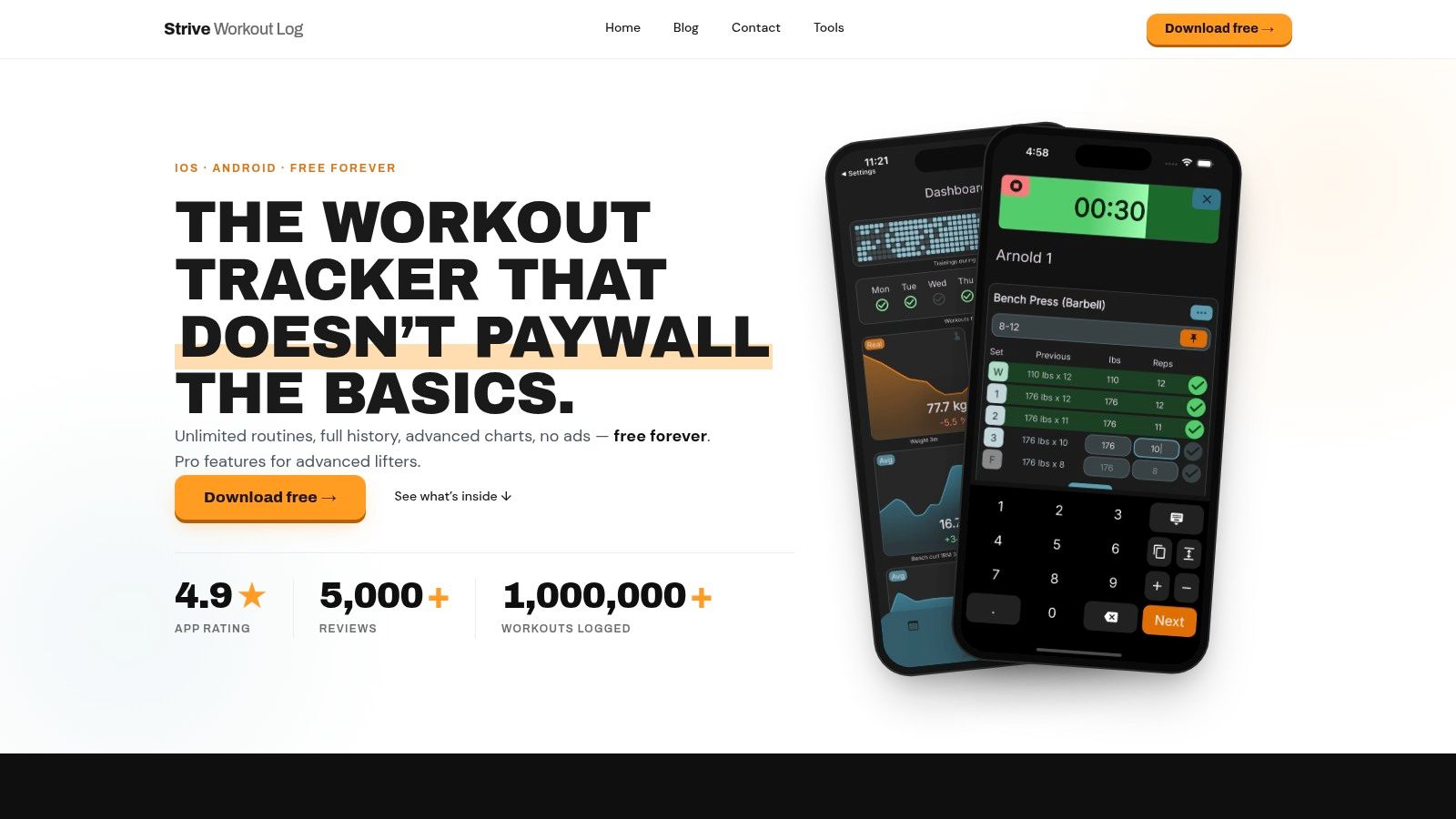
If you want a simple way to run that system without ads, clutter, or a spreadsheet, Strive Workout Log is built for exactly that workflow. Log lifts, set progression targets, review charts, and keep deloads visible so your training data stays useful over the long term.
Leave a Reply